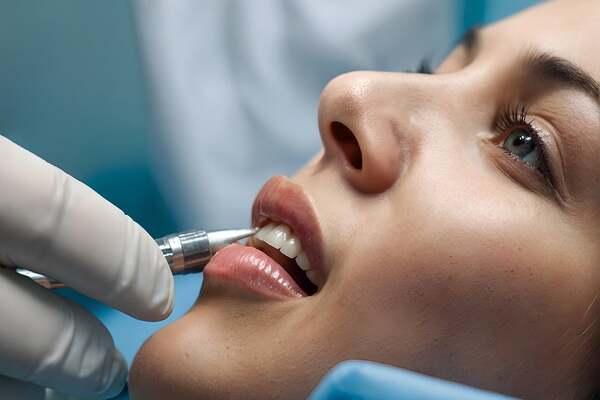


Got Your Dental X-ray Done? Here’s Why it Matters!
In modern dentistry, there are many advanced tools, such as dental X-rays, to improve your oral health. With an oral examination via an X-ray, your dentist can take a closer look at any underlying issues that may be harming your gums or teeth. Continue reading to understand about dental X-rays and why it’s recommended by a dentist to get them done annually or every six months.
Why is a Dental X-ray?
A dental X-ray is a technique of scanning and getting images of teeth and gums to capture their interior that’s not visible to the naked eye. It helps dentists to find out underlying issues, like tooth decay, cavities, impacted teeth, and bone loss. Therefore, it’s an important part of regular teeth checkups and cleanings. So, dentists can detect any dental problem early before it turns into something serious.
What problems can dental X-rays detect?
Here are some common problems that dental X-rays can identify early:
- Infection in the bone.
- Decay below an existing filling
- Abscesses and cysts
- Decay in-between teeth (or that’s not visible to the naked eye)
- Developmental abnormalities
- Impacted wisdom teeth
- Bone loss, along with gum disease
- Specific types of tumors
Also Read: Improve Children’s Oral Health with Myofunctional Therapy
Dental X-rays help dentists prepare for braces, dental implants, dentures, or other dental treatments in advance.
Benefits of Dental X-rays
Dental X-rays offer you the following benefits:
1. Monitor Jawbone HealthJawbone is vital in supporting your gums, teeth, and overall oral health. X-ray detection can help you monitor the density and health of the jawbone. It is important for patients with gum disease, missing teeth, and those considering dental implants.
2. Detect Decay and Cavities EarlyDecay and cavities are not visible with regular checkups. That’s where dentists go for an X-ray to spot any hidden signs of cavities or decay. So, the patient can get timely treatment while preventing tooth decay.
3. Detect Impacted TeethImpacted teeth, specifically wisdom teeth, can cause infection, pain, or alignment problems if not treated in time. X-rays offer a clear view of the positioning of teeth, enabling dentists to suggest the best possible treatment to retain your smile.
4. Assess Teeth and Root AlignmentCertain misaligned teeth and roots may lead to certain issues, from bite problems to a higher risk of tooth decay. With the help of X-rays, a dentist can get a detailed view of teeth and roots. So, they can form personalized treatments for their patients to correctly align and improve their oral function.
5. Identify Oral Abscesses and InfectionsOral abscesses and infections usually develop under the surface, making it hard to detect without imaging. So, X-ray is required in this case as well to identify such issues early. Hence, a dentist can work on a prompt treatment plan to prevent future complications and discomfort.
Are Dental X-Rays Safe
With advancements in technology, modern dental X-rays are safer than ever before. At Rising Dental Practices, we use digital X-rays for emitting less radiation compared to conventional film X-rays. We even take precautions, like using thyroid collars and lead aprons, to reduce exposure while ensuring safety.
Note: Dental X-rays are generally safe for many patients. However, these are contraindicated for pregnant women unless there’s any emergency. We even customise special settings and techniques for children to reduce their radiation exposure while attaining accurate results.
How often should dental X-rays be considered for oral health?
Since everyone’s oral health is different, the frequency at which one can get a dental X-ray varies as per different factors, like:
- Age
- Oral health history
- Any signs of oral infection/disease
- Current oral health
For those with good oral health, dental X-rays can be done every one or two years for a general checkup. But for those with any dental issue, dental X-rays may be recommended every six months. However, it’s best to consult a professional dentist before undergoing this procedure at any private clinic.
What to Expect During a Dental X-Ray Procedure?
If you haven’t experienced a dental X-ray procedure before, here’s what you must expect during your visit:
- Preparation: You have to wear a protective lead apron along with a thyroid collar for protecting yourself against radiation.
- Imaging: For this, a dentist or a dental assistant will put a small film or sensor in your mouth and take X-rays from different angles. This helps in capturing images of your gums, teeth, and jaw.
- Review: A dentist will review the images and explain the findings while recommending a suitable treatment for your condition (if any).
Conclusion
Dental X-rays are important to maintain one’s oral health. It provides a deeper understanding of one’s gums, teeth, and jaw. At Rising Dental Care, we use advanced technology to ensure you get the best possible dental care and treatment. Depending on your oral condition, we recommend suitable dental procedures, such as Veneers, Dental Implants, Dental Crowns, Dentures, Braces, or any other.
Get in touch with our team today and schedule your next checkup to take the first step towards a bright, healthy smile.
You Can Also Read:Why routine dental examination matters?